WHY PAPER?TẠI SAO LẠI LÀ GIẤY?
Before Hạc Studio existed, there was a kid who couldn't stop folding paper. Years later, that habit became a way to give products a world of their own.Trước khi có Hạc Studio, có một đứa trẻ không thể ngừng gấp giấy. Nhiều năm sau, thói quen ấy trở thành cách studio dựng nên một thế giới riêng cho từng sản phẩm.
TRUE STORY FROM THE FOUNDERCÂU CHUYỆN CÓ THẬT TỪ NGƯỜI SÁNG LẬP
 hình minh họa
I folded paper before I knew it was art.Tôi gấp giấy trước khi biết đó là nghệ thuật.
I don't remember folding my first crane.Tôi không nhớ mình đã gấp con hạc đầu tiên như thế nào.
I just remember that by the time I was old enough to remember things clearly, folding paper was already there. Nobody made me learn it. I never took a single origami class either. There was paper, there were two hands, there was empty time to fill — that was enough.Chỉ nhớ rằng từ lúc đủ lớn để nhớ mọi thứ cho rõ ràng, gấp giấy đã ở đó rồi. Không ai bắt tôi học. Tôi cũng chưa từng đi một lớp origami nào. Có giấy, có hai bàn tay, có một khoảng thời gian trống — vậy là đủ.
I grew up in Thu Duc City, part of Ho Chi Minh City. When I was a child, though, it was still called Thu Duc District. There was a bookstore in the district called Thu Duc Bookstore, and my family home was just one street away.Tôi ở Thành phố Thủ Đức, nằm trong Thành phố Hồ Chí Minh. Nhưng trước đây, lúc tôi còn nhỏ, nơi này vẫn được gọi là Quận Thủ Đức. Trong quận có Nhà sách Thủ Đức, và nhà tôi chỉ cách đó một con đường.
My family didn't have money to spare for books back then. I used to walk there on my own, skip right past the comic books, and go straight to the origami shelf to stand and read. The books I liked could usually only be read there, so I came up with my own trick: tear a double sheet from my notebook, fold it into quarters to keep it small, and tuck it into my pocket.Nhà tôi lúc đó không dư tiền mua sách. Tôi hay tự mình đi bộ qua đó, bỏ qua quầy truyện tranh, đi thẳng tới kệ sách gấp giấy rồi đứng đọc. Những cuốn tôi thích thường chỉ có thể xem tại chỗ, nên tôi tự nghĩ ra một cách: bứt một tờ giấy đôi của cuốn tập, gấp lại làm tư cho gọn rồi nhét vào túi quần.
At the bookstore, I'd unfold it and fold along whatever I was seeing in the book.Đến nhà sách, tôi mở bung nó ra và gấp theo những gì đang thấy trong sách.
Next time, I'd bring a different scrap.Lần sau lại đem một mảnh khác.
Other kids crowded the comic-book shelf. I usually stood off in my own corner with my little piece of paper, watching where one fold led, and how the next one changed the shape.Bọn trẻ con khác chen nhau ở kệ truyện tranh. Tôi thường đứng riêng ở một góc với mảnh giấy của mình, xem một nếp gấp đi đâu, rồi nếp tiếp theo làm thay đổi hình dạng thế nào.
Some models I got right.Có những mẫu tôi làm được.
Some I stood over for an entire afternoon and still couldn't figure out.Có những mẫu đứng cả buổi vẫn không hiểu.
But I kept coming back.Nhưng tôi cứ quay lại.
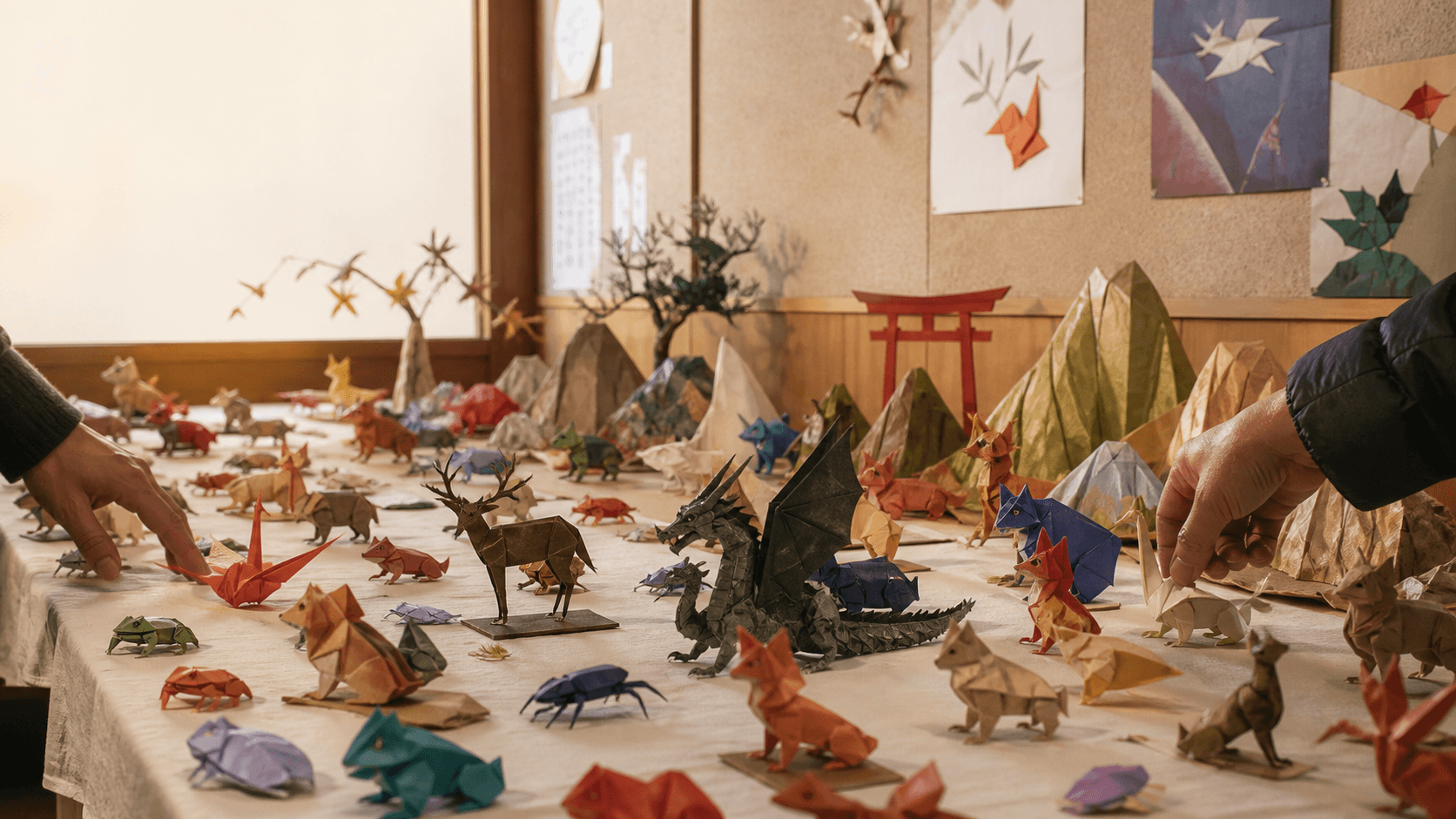
Later I still bought origami books. Some are full of diagrams so complex I still haven't folded all of them to this day. Some are so beautiful I bought them just to take out and look at every so often. Wherever there was an origami exhibition I found out about, I went.Sau này tôi vẫn mua sách origami. Có những cuốn đầy sơ đồ phức tạp mà đến giờ tôi chưa từng gấp hết. Có những cuốn đẹp đến mức mua về rồi chỉ thỉnh thoảng lấy ra xem. Có triển lãm origami ở đâu đó mà tôi biết được, tôi cũng tìm đến.
I'd often stand a long time in front of one piece.Tôi thường đứng khá lâu trước một tác phẩm.
Not just to see what animal it resembled, but to guess how the maker had brought the paper to that shape.Không chỉ để nhìn xem nó giống con gì, mà để đoán người làm đã đưa tờ giấy đến hình dạng đó bằng cách nào.
Why this fold.Vì sao lại là nếp gấp này.
Why here.Vì sao lại nằm ở đây.
And what would happen if it shifted, just slightly.Và chuyện gì xảy ra nếu nó lệch đi một chút.
I never thought I'd make a living from paper.Tôi chưa từng nghĩ mình sẽ kiếm sống bằng giấy.
I just simply never stopped paying attention to it.Tôi chỉ đơn giản là chưa bao giờ ngừng để tâm đến nó.
It was only much later that I realized I'd stepped into a very old story.Mãi sau này tôi mới biết mình đã bước vào một câu chuyện rất cũ.
I didn't know where origami came from.Khi còn nhỏ, tôi không biết origami đến từ đâu.
I also didn't know that people folding paper had started more than a thousand years ago.Tôi cũng không biết việc con người gấp giấy đã bắt đầu từ hơn một nghìn năm trước.
Papermaking reached Japan from China around the 7th century. Paper was still precious then, so the earliest folds weren't born as a pastime. They appeared in ceremony, in the way gifts were wrapped, in objects that carried special meaning.Nghề làm giấy đến Nhật Bản từ Trung Quốc khoảng thế kỷ thứ 7. Giấy khi ấy còn quý, nên những cách gấp đầu tiên không sinh ra như một trò tiêu khiển. Nó xuất hiện trong nghi lễ, trong cách bao gói quà tặng và những vật phẩm có ý nghĩa đặc biệt.
Over the centuries, paper folding gradually stepped outside those ceremonial forms and became something closer to the origami we know today.Qua nhiều thế kỷ, việc gấp giấy dần đi ra khỏi những khuôn thức nghi lễ đó và trở thành thứ gần với origami mà chúng ta biết ngày nay.
Oru means to fold.Oru nghĩa là gấp.
Kami means paper.Kami nghĩa là giấy.
By the 20th century, Akira Yoshizawa took origami somewhere else entirely. He created tens of thousands of models, developed a way to record fold sequences in notation, and helped turn origami from a handicraft into a modern art form.Đến thế kỷ 20, Akira Yoshizawa đưa origami sang một bước ngoặt khác. Ông tạo ra hàng chục nghìn mẫu, phát triển cách ghi lại trình tự gấp bằng ký hiệu và góp phần biến origami từ một thú thủ công thành một hình thức nghệ thuật hiện đại.
What I love most about origami was never its history.Điều làm tôi thích nhất ở origami lại không nằm ở lịch sử của nó.
It's one very simple rule:Mà ở một quy tắc rất đơn giản:
One sheet of paper.Một tờ giấy.
No cutting.Không cắt.
Nothing added.Không thêm gì vào.
And yet from that, a crane can appear, an elephant, a flower, a geometric structure so complex you can barely recognize where it started.Vậy mà từ đó có thể xuất hiện một con hạc, một con voi, một bông hoa, một cấu trúc hình học phức tạp đến mức gần như không còn nhận ra điểm xuất phát của nó.
As a kid I didn't know who Yoshizawa was.Khi còn nhỏ tôi không biết Yoshizawa là ai.
I only knew that a flat, plain, unremarkable white sheet of paper could become a great many things, if you knew where to fold it.Tôi chỉ biết một tờ giấy trắng, phẳng lì, chẳng có gì đáng chú ý, có thể trở thành rất nhiều thứ nếu mình biết phải gấp nó ở đâu.
And the older I got, the stranger I found that.Và càng lớn, tôi càng thấy điều đó kỳ lạ.
Not because we add something to the paper.Không phải vì ta thêm thứ gì vào tờ giấy.
But because the new shape was already capable of existing inside it.Mà vì hình dạng mới vốn đã có khả năng tồn tại trong nó.
The folder's only job is to find it.Công việc của người gấp chỉ là tìm ra nó.
At some point, paying attention became a studio.Đến một lúc nào đó, sự để tâm ấy trở thành một studio.
Hạc Studio didn't start with a business plan.Hạc Studio không bắt đầu bằng một bản kế hoạch kinh doanh.
I also didn't wake up one day and decide the advertising industry needed another studio that worked in paper.Tôi cũng không thức dậy vào một ngày rồi quyết định rằng ngành quảng cáo cần thêm một studio làm bằng giấy.
It started from a smaller question:Nó bắt đầu từ một câu hỏi nhỏ hơn:
If paper can hold the shape of almost anything, could it hold a product's story too?Nếu giấy có thể mang hình dạng của gần như bất cứ thứ gì, liệu nó có thể mang luôn câu chuyện của một sản phẩm hay không?
I started thinking about a bottle of perfume.Tôi bắt đầu nghĩ về một chai nước hoa.
A box of cakes.Một hộp bánh.
A dish.Một món ăn.
A piece of furniture.Một món đồ nội thất.
Not turning them into paper just to prove it could be done.Không phải làm chúng thành giấy chỉ để chứng minh rằng mình có thể làm được.
But seeing how far paper could take people to see that product differently.Mà là xem giấy có thể giúp người ta nhìn sản phẩm đó khác đi đến đâu.
Sometimes the real product still has to stand at the center, with paper building the world around it.Có lúc sản phẩm thật vẫn phải đứng nguyên ở trung tâm, còn giấy xây thế giới xung quanh nó.
Sometimes the product itself gets rebuilt entirely in paper.Có lúc chính sản phẩm được tái tạo hoàn toàn bằng giấy.
Sometimes just one fold, one layer of paper, one small structure is enough to bring out the most important thing about a brand.Có lúc chỉ cần một nếp gấp, một lớp giấy, một cấu trúc nhỏ cũng đủ để làm bật lên điều quan trọng nhất của thương hiệu.
The starting point was never:Điểm bắt đầu không phải là:
What can we do with paper?Chúng ta có thể làm gì với giấy?
It was:Mà là:
What about this product deserves to be remembered — and how can paper help tell that?Điều gì ở sản phẩm này đáng để người ta nhớ — và giấy có thể giúp kể điều đó như thế nào?
Years later I realized that work wasn't so different from those afternoons at Thủ Đức Bookstore.Nhiều năm sau tôi mới nhận ra công việc ấy không khác những buổi chiều ở Nhà sách Thủ Đức là bao.
Back then, I'd stand in front of a book, look closely at something already finished, try to understand the decisions behind it, then pull the scrap of paper out of my pocket and try it myself.Ngày đó, tôi đứng trước một cuốn sách, nhìn thật kỹ một thứ đã hoàn thành, cố hiểu những quyết định nằm phía sau nó rồi lấy mảnh giấy trong túi ra thử.
Now, in front of me is a product.Bây giờ trước mặt tôi là một sản phẩm.
A brand.Một thương hiệu.
A story that doesn't have a shape yet.Một câu chuyện chưa có hình dạng.
And I still start almost the exact same way.Và tôi vẫn bắt đầu gần như bằng cùng một cách.
Look closely.Nhìn thật kỹ.
Understand it first.Hiểu nó trước.
Then fold.Rồi mới gấp.
This is where it started.Đây là nơi mọi thứ bắt đầu.
More stories will be added over time, including the brands we've built with. In the meantime, here's what that instinct for paper turns into.Sẽ có thêm nhiều câu chuyện khác theo thời gian, kể cả về các thương hiệu chúng tôi từng cùng xây dựng. Còn trước mắt, đây là những gì bản năng ấy tạo ra.
See the projectsXem dự án